
✆ + 1-646-235-9076 ⏱ Mon - Fri: 24h/day
Bio-IoT: When Sensors Meet the Human Body on a Cellular Level

Bio-IoT (Biological Internet of Things) is a concept of the Internet of Things in which networks of sensors and devices are integrated not only into a person’s environment but also directly into the biological structures of the human body. The core of such a system lies in devices capable of interacting with cells, tissues, or biomolecules – collecting data on health conditions and transmitting them for further analysis, even in real time.
Unlike classical IoT, where data mainly come from technical systems, Bio-IoT relies on biological signals – electrophysiological, biochemical, mechanical, and molecular parameters. This approach opens the way to new possibilities and the evolution of existing fields, such as:
- Personalized medicine – monitoring and therapy tailored to individual patients.
- Continuous health tracking beyond hospital settings.
- Early detection of diseases before clinical symptoms appear.
An important aspect of these systems today is the integration of artificial intelligence, which plays a key role in Bio-IoT by processing massive amounts of data and identifying patterns that would be difficult to detect through traditional diagnostics.
Modern examples of Bio-IoT include implanted sensors for arrhythmia monitoring, wireless glucose meters, digital biomarkers for neurological disorders, and biocompatible microchips that dissolve after completing their functions. These technologies demonstrate that the integration of electronics with living tissue is no longer a hypothesis – it is becoming one of the key directions in the future of medicine.
Bio-IoT Devices
Bio-IoT devices are sensor systems designed to integrate with the human body at various levels – from the skin surface to cellular and even intracellular processes. Their main function is to convert biological signals into digital data that can be analyzed in real time and, when necessary, used to trigger automatic or controlled medical interventions.
These technologies can generally be divided into several categories:
- Wearable devices: external sensors that contact the skin or are worn on the body, such as smartwatches, biosensor patches, and textiles with integrated electrodes. They record vital parameters such as heart rate, respiration, temperature, and the electrical activity of muscles and the brain. A modern direction in this field is electronic skin – flexible polymer sensors that mimic tactile sensitivity and can even self-heal.
- Implantable devices: systems that operate inside the body, providing continuous access to biomedical signals. The most common examples include pacemakers, neurostimulators, and implants for monitoring blood or intraocular pressure. A new stage of development involves biocompatible microchips that dissolve naturally or draw energy from the body itself (e.g., from muscle movement or glucose in the blood).
- Ingestible devices: smart capsules that temporarily reside in the digestive tract. They can function as miniature laboratories – measuring pH levels, analyzing the microbiome, capturing images of intestinal structures, and transmitting data externally. Some models can also manage targeted drug delivery, releasing active substances only in specific parts of the body.
- Cellular level nano-sensors: the most innovative and least invasive class of devices. Nanomaterials and DNA- or biomolecule-based sensors can bind to individual cells and detect early stages of cancer, inflammation, or metabolic disorders long before symptoms appear. Theoretically, such sensors could not only diagnose conditions but also activate therapeutic responses automatically – for instance, triggering an immune reaction when needed.
How Bio-IoT Works
The operating principle of Bio-IoT is based on converting the body’s natural signals into digital data that can be processed and used for medical decision-making. Initially, biological signals such as cardiac electrical activity, glucose concentration, or hormone levels are detected by sensors integrated with the body. The data collected and then transmitted wirelessly (via Bluetooth, NFC, 5G, or Li-Fi) to a smartphone, medical hub, or cloud platform. Next, artificial intelligence algorithms analyze these indicators, detect abnormalities, and generate recommendations or trigger automatic responses from adjusting an insulin dose to calling emergency services. Thus, Bio-IoT enables a continuous «measure–analyze–act» cycle, supporting real-time health monitoring and management.
Key Technologies Behind Bio-IoT
The foundation of Bio-IoT lies in advanced technologies capable of safely and accurately capturing biological processes and translating them into digital form. Biosensors are the central component of these systems: they can be electrochemical (for analyzing blood or interstitial fluid composition), optical (for measuring oxygen levels or pulse through changes in the light spectrum), glucose sensors, or DNA sensors that detect specific mutations or pathogens. To create such sensors, nanomaterials are extensively used – for example graphene, which provides high conductivity and sensitivity, and biocompatible polymers, which safely interact with tissues and can even dissolve after completing their function.
The entire infrastructure relies on wireless communication adapted for operation within or between biological tissues known as Body Area Networks (BANs). The most common technologies include NFC for short-range communication, Bluetooth Low Energy (BLE) for low-power wearable devices, and WBAN (Wireless Body Area Network) for more complex implants and medical sensing systems. The collected data are transmitted to smartphones or cloud-based medical platforms, where they are integrated with electronic health records and AI-driven analytics modules. This establishes a new level of interaction between humans, technology, and medicine where the body itself can «communicate» with the healthcare system.
From Wearables to Cellular-Level Monitoring
Bio-IoT is undergoing rapid evolution: from familiar fitness trackers that merely count steps and monitor heart rate to high-tech implants and even nanoparticles that circulate in the bloodstream and interact with cells. These systems can not only record physiological parameters but also actively modify them – for example, by releasing medication in controlled doses or adjusting organ functions in real time. Gradually, a new concept is emerging bio-digital twins: digital models of organs or entire organisms that are continuously updated with sensor data. This enables physicians to predict risks, test therapies, and optimize treatment even before a disease manifests.
The most notable Bio-IoT solutions include smart pacemakers that adapt heart rhythm based on physical activity, wireless insulin micropumps that automatically regulate glucose levels, nano-sensors capable of detecting cancer markers at early stages, and sensors for monitoring neural activity – a critical area for treating epilepsy and neurodegenerative diseases. Such technologies not only expand the possibilities of diagnostics and therapy but also gradually reshape our understanding of medicine, making it increasingly precise, personalized, and preventive.
AI/ML for Personalized Health Predictions
Artificial intelligence (AI) and machine learning (ML) are becoming integral parts of Bio-IoT, enabling the transformation of vast streams of biological data into practical medical solutions. AI analyzes sensor signals, detects hidden patterns, and builds personalized models of a patient’s health. For example, algorithms can predict cardiovascular risks based on continuous monitoring of heart rate and blood pressure or identify early signs of metabolic disorders using data from glucose sensors. Machine learning also makes it possible to integrate diverse data sources: from wearable devices to cellular sensors and create digital twins that simulate the body’s responses to drugs or therapeutic interventions. This approach makes medicine not reactive but preventive, allowing doctors to make decisions based on accurate forecasts and empowering patients to actively monitor their health in real time.
Benefits for Healthcare and Everyday Life
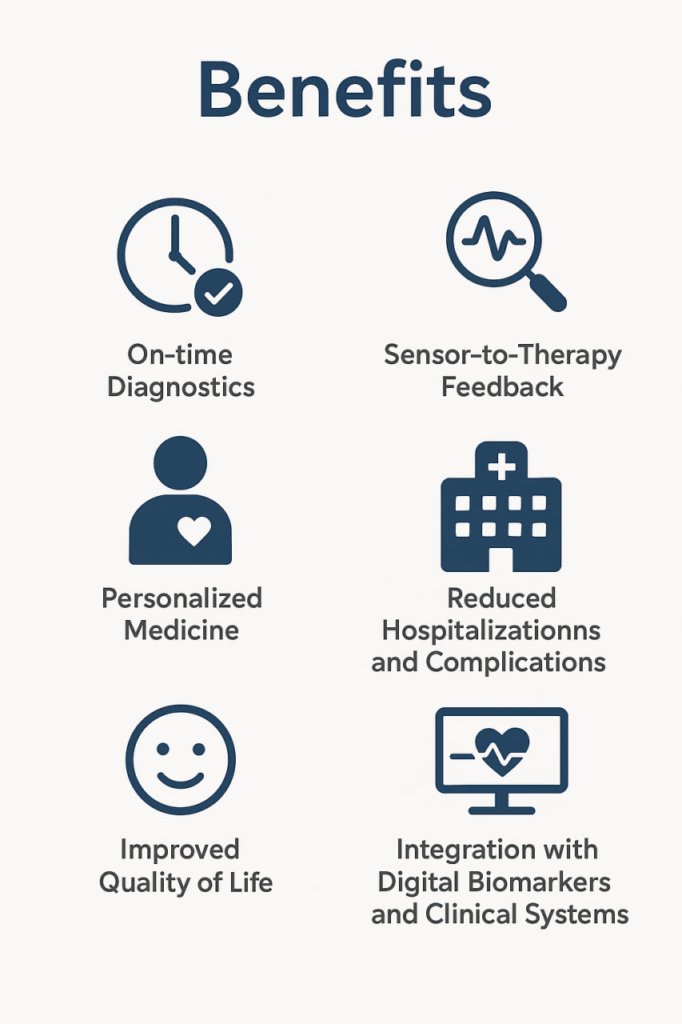
Bio-IoT opens vast opportunities for medicine and everyday health management by combining continuous monitoring, analytics, and personalized treatment. The key advantages include:
- On-time Diagnostics: implanted or wearable sensors collect real-time bio-signals: electrophysiological, biochemical, and molecular. This enables the detection of abnormalities before symptoms appear, greatly improving the effectiveness of treatment and prevention.
- Sensor-to-Therapy Feedback: feedback systems allow direct adjustment of therapy based on sensor data. Examples include insulin micropumps, smart pacemakers, and electronic implants for hormonal regulation. This increases treatment precision and reduces the risk of side effects.
- Personalized Medicine: AI and ML process large volumes of data to create individual patient models. Therapeutic decisions, medication dosages, physical activity, and diet can all be adapted to each patient, considering genetics, lifestyle, and physiological responses.
- Reduced Hospitalizations and Complications: continuous monitoring helps detect critical conditions early and prevent the worsening of chronic diseases. This reduces the need for frequent hospital visits, saves healthcare resources, and increases system efficiency.
- Improved Quality of Life: patients gain real control over their health in daily life. The ability to track metrics via apps or mobile devices allows for more responsible planning of activities, nutrition, and therapy, enhancing overall well-being.
- Integration with Digital Biomarkers and Clinical Systems: data from Bio-IoT devices can be automatically synchronized with electronic health records and clinical databases, ensuring a continuous flow of information for doctors and researchers.
Challenges and Ethical Concerns
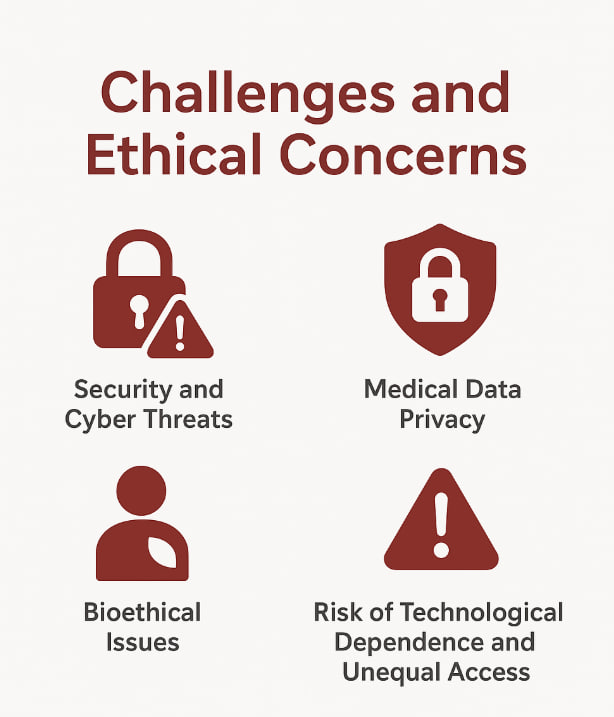
Bio-IoT opens new horizons for medicine but also introduces a range of serious challenges and ethical dilemmas that must be addressed as these technologies are implemented. The main issues include:
- Security and Cyberthreats: implanted and wearable devices can become targets of cyberattacks. Malicious actors could attempt to take control of pacemakers, insulin pumps, or nanorobots in the bloodstream posing real dangers to patients’ lives. Protection measures include data encryption, device authentication, secure transmission protocols, and regular software updates.
- Privacy of Medical Data: Bio-IoT generates enormous volumes of personal information – from heart rhythms to genetic markers. Uncontrolled access to or transmission of such data could lead to privacy breaches and discrimination. Reliable data storage systems, encryption, and strict access control mechanisms must be ensured.
- Bioethical Concerns: the interaction of technology with the human body raises questions of moral responsibility. Does a person have the right to disable or modify a device embedded in their body? How should the use of nanorobots or sensors that interact with cells be regulated? These issues require clear ethical standards and legal frameworks.
- Risk of Technological Dependence and Unequal Access: the integration of Bio-IoT into everyday life may lead to dependency on technology for personal health management. Moreover, the high cost of innovative solutions creates unequal access – wealthier populations benefit, while poorer groups may be left outside the system.
- Regulatory Compliance: implanted IoT devices are subject to strict medical and technical standards. Compliance with local and international regulations on safety, clinical trials, certification, and post-market monitoring is essential. Failure to meet these standards can result in legal consequences and health risks for patients.
The development of Bio-IoT requires not only technological excellence but also careful consideration of ethical, security, and regulatory aspects. Only by integrating these factors can the safe and effective adoption of such technologies in medical practice be ensured.
Case Studies and Cutting-Edge Initiatives
MiniMed by Medtronic – an automated insulin pump that adjusts insulin delivery in real time, receiving glucose level data from a sensor every five minutes. This is an example of a Bio-IoT device that integrates with the patient’s body, transmits biological signals, and automatically reacts, reducing the user’s workload.
Neuralink implanted a brain chip that enabled a person with paralysis to control a computer cursor using only their thoughts. This technology demonstrates the deep integration of sensors, implants, and AI analysis at the cellular-neural level — a classic case of Bio-IoT in action.
DNA‑based nanosensors for oncology (Massachusetts Institute of Technology (MIT) research) – MIT researchers have developed low-cost electrode sensors with DNA barcodes for early cancer diagnosis. These nanosensors can detect biomarkers in urine after nanoparticle application, paving the way for nanoscale biosensors that can be embedded in the body or internally used to monitor cellular processes.
Conclusion
Bio-IoT is becoming a cornerstone of future medicine, combining sensors, nanotechnology, and artificial intelligence to monitor human health at the cellular level and provide real-time data. This enables a transition from the traditional reactive approach treating existing symptoms to preventive medicine, focused on early detection of pathologies and personalized therapy tailored to each patient.
However, this progress also brings serious challenges. Cybersecurity becomes critical, as implanted or intracellular sensors may be vulnerable to attacks. Data privacy and ethical issues, such as a person’s right to control their own biological devices, require careful regulation. Additionally, it is essential to ensure equal access to innovations so that technological progress does not deepen social inequality in healthcare.
In summary: the success of Bio-IoT depends on a harmonious balance between scientific research, technological advancement, and adherence to human values. Only under these conditions can such systems become powerful tools for effective and personalized healthcare transforming medicine from a reactive discipline into a proactive science that predicts and prevents diseases before symptoms appear.