
✆ + 1-646-235-9076 ⏱ Mon - Fri: 24h/day
Digital Twins 2.0: Beyond the 3D Model. Part 1.

For the past decade, the term “digital twin” has been a popular buzzword in manufacturing and engineering circles. For most of this time, it described a concept that was powerful but, in retrospect, somewhat static: a high-fidelity 3D model of a physical asset like a jet engine or a factory floor that was overlaid with operational data. This “Digital Twin 1.0” is a brilliant blueprint. It allowed us to visualize stress, monitor performance, and understand what was happening to a machine in a way we never could before.
But this model, as revolutionary as it was, was primarily a reflection. It was a mirror showing us the present, or perhaps the recent past.
Today, a profound evolution is underway. We are entering the era of Digital Twins 2.0, a shift as significant as the move from a static blueprint to a living, breathing organism. This new generation of digital twins doesn’t just reflect reality; it simulates, predicts, and even influences it in real-time. It’s no longer just a model to be looked at, but an autonomous, intelligent partner capable of running “what-if” scenarios for the future.
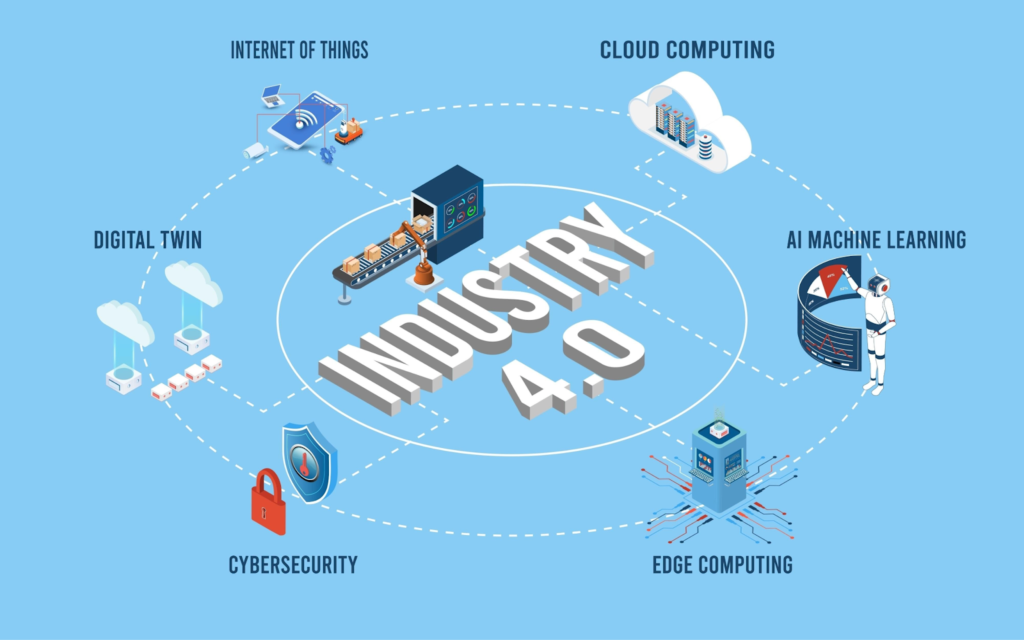
This transformation isn’t just an incremental update. It’s a fundamental change in how we interact with the physical world, driven by the convergence of three powerful forces: the Internet of Things (IoT), cloud computing, and artificial intelligence (AI).
What Was “Digital Twin 1.0”? The Static Reflection
To understand where we are going, we must first appreciate where we’ve been. The classic digital twin, or “DT 1.0,” was born from the needs of capital-intensive industries. Imagine a wind turbine company. Building a multi-million dollar turbine is one thing; ensuring it operates efficiently and safely for 20 years in a harsh environment is another.
The DT 1.0 solution was to create a detailed CAD (Computer-Aided Design) model of that turbine. This 3D model was then connected to data from the real turbine’s sensors. Engineers in a control room could look at the 3D model and see, for example, that the gearbox temperature on Turbine 1138 was running high, or that its blade pitch was slightly off.
This was revolutionary for descriptive analytics. It answered the question: “What is happening right now?” and “What happened last week?”
It allowed for remote monitoring and some basic diagnostics. However, this model had clear limitations:
- It was mostly one-way: Data flowed from the physical asset to the digital model. The model was a passive receiver.
- It had a time lag: The data was often collected in batches, not in a true, instantaneous stream.
- It was not truly predictive: It could show you a problem was developing, but it couldn’t reliably run complex simulations to tell you why it was happening or what would happen next under a dozen different scenarios.
It was, in essence, the world’s most advanced instruction manual.
The Leap to 2.0: The “Living” Simulation
Digital Twin 2.0 is something else entirely. It is a dynamic, self-learning, and interconnected simulation. The key difference is that its primary purpose is not just to describe the present, but to predict the future and prescribe the best course of action.
Let’s revisit our wind turbine.
The DT 2.0 of that turbine isn’t just a 3D model; it’s a physics-based simulation model that is continuously calibrated by real-time data. This “living” model is fed an unceasing stream of information from thousands of IoT sensors: not just temperature, but vibration harmonics, air density, particulate matter, and even the wake turbulence from nearby turbines.
This constant, high-fidelity data stream, powered by AI, allows the twin to do things its predecessor could only dream of.
| Feature | Digital Twin 1.0 (The Reflection) | Digital Twin 2.0 (The Simulation) |
| Data Flow | One-way: Physical to Digital | Bi-directional: Physical ↔ Digital |
| Data Timing | Near real-time or batch (Historical) | True Real-Time (Instantaneous) |
| Core Function | Descriptive: “What is happening?” | Predictive & Prescriptive: “What will happen, and what should we do?” |
| Key Technology | 3D CAD + IoT Sensors | IoT + AI/ML + Physics-Based Simulation |
| State | Static / Passive | Dynamic / Autonomous |
| Example | “The turbine’s gearbox is 5°C too hot.” | “Based on the current vibration, wind speed, and metal fatigue model, the gearbox will fail in 72 hours unless we de-rate its power by 15% and schedule maintenance.” |
The Three Pillars of the 2.0 Revolution
This leap wasn’t caused by a single breakthrough. It’s the result of three technology trends maturing at the exact same moment.
1. The Internet of Things (IoT): The Nerves
If the digital twin is the “brain,” IoT sensors are the nervous system. The cost of high-quality sensors measuring vibration, temperature, chemical composition, light, and motion has plummeted. We can now afford to place thousands of these sensors on a single asset, creating a data-rich “nerve ending” that reports on the physical world with microscopic detail.
2. Cloud & Edge Computing: The Power
A living simulation processing thousands of data points per second requires enormous computational power. The hyperscale cloud (from providers like AWS, Google, and Microsoft) provides this power on demand. We no longer need a supercomputer in the basement. Furthermore, edge computing allows initial data processing to happen right on the device, reducing latency for decisions that need to be made in milliseconds.
3. Artificial Intelligence (AI): The Intelligence
This is the true game-changer. AI, specifically machine learning (ML), is the “mind” inside the simulation. It’s what allows the twin to learn.
- AI models analyze the torrent of IoT data to find patterns invisible to any human.
- They fuse this real-world data with physics-based models to create a simulation that is not just a guess, but a highly accurate prediction.
- This AI allows the twin to run thousands of “what-if” scenarios simultaneously. “What if a 100 mph gust hits the turbine?” “What if we use a different lubricant?” “What is the optimal blade pitch to maximize power but minimize stress right now?”
Beyond the 3D Model: A New Kind of Partner
The shift from 1.0 to 2.0 is a shift from a passive tool to an active partner. The new digital twin is bi-directional.
This means the flow of information goes both ways. When the AI in the digital twin runs its simulations and determines the optimal course of action, it can send a command back to the physical asset.
The turbine’s twin doesn’t just send an email to an engineer warning of a failure. It can autonomously adjust the turbine’s blade pitch by 2 degrees and slightly slow its rotation, perfectly balancing energy production and asset health, all before a human even has their morning coffee.
This is where the real transformation lies. We are no longer just monitoring our most complex systems; we are building intelligent, self-healing, and self-optimizing versions of them. The “Digital Twin 1.0” was an echo of the real world. The “Digital Twin 2.0” is a living, working copy of it, paving the way for a future where we can test, predict, and perfect our physical world in a digital realm before we ever lay a hand on it.