
✆ + 1-646-235-9076 ⏱ Mon - Fri: 24h/day
How IoT is Driving the Future of Precision Agriculture

In 2025, agriculture is no longer a purely manual, seasonal activity. It’s a high-tech, data-driven industry at the front lines of climate resilience, food security, and economic survival.
The Problem Agriculture Is Facing Today
- Climate instability has made weather patterns unpredictable – floods, droughts, and heat waves are more frequent.
- Soil degradation from over-farming and erosion is reducing productivity.
- Water scarcity affects nearly every continent.
- Meanwhile, the global population continues to grow, and we must feed 10 billion people by 2050.
Traditional methods alone can’t keep up. Modern agriculture must do more with less: less land, less water, and less chemical input, while producing more food and protecting ecosystems.
What Is Precision Agriculture?
Precision agriculture (also called “smart farming”) is the application of technologies like sensors, GPS, data analytics, drones, and IoT to monitor and optimize crop and soil health at a granular level.
Instead of treating a whole farm the same way, precision farming treats each plant, patch of land, or row based on real data.
Imagine:
- Irrigation systems that water only where it’s dry
- Fertilizers are applied only where nutrients are lacking
- Farmers are getting text alerts when the disease risk is high in a specific field corner
Of course, this approach leads to:
- Higher yields
- Lower input costs
- Minimal environmental harm
- Predictable harvests
The Great Green Wall: The coolest technological miracle of 2021 century
One of the most ambitious and inspiring agricultural initiatives is the Great Green Wall in Africa. This project aims to plant trees and restore degraded land across 8,000 km of the Sahel – one of the world’s most threatened landscapes
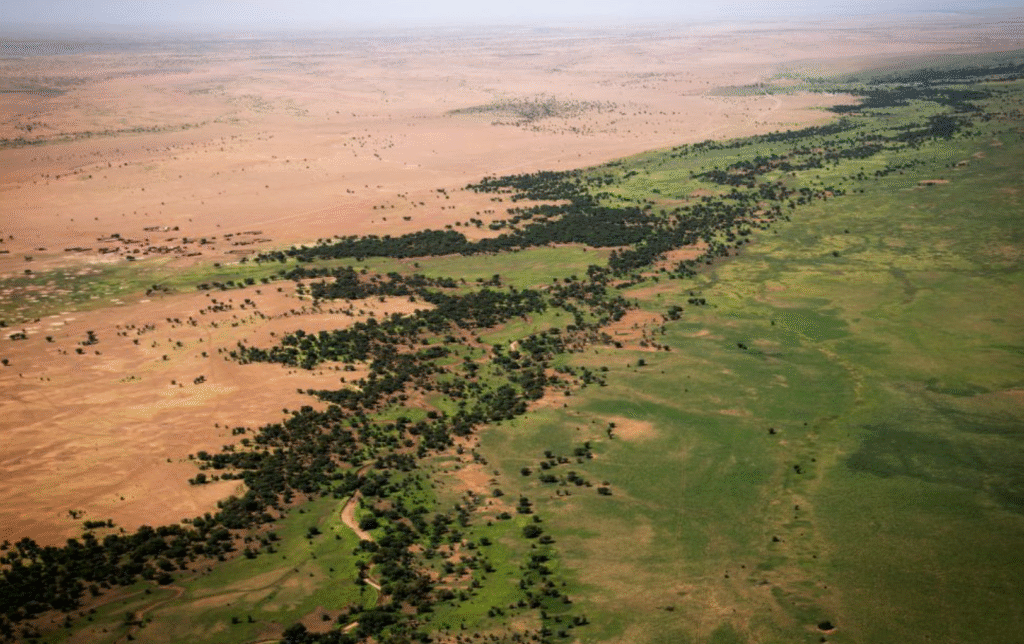
Picture source: kids.earth.org.
Why is it succeeding? Because it’s not just about planting. It’s about data and monitoring:
- Rain sensors track precipitation patterns
- Soil data determines what and where to plant
- Satellite images measure regrowth and deforestation
- Farmers receive localized weather and planting advice via mobile apps
Already over 20 million hectares have been restored
350,000+ jobs created in rural communities
With scale, it could capture 250 million tons of CO₂ and feed millions
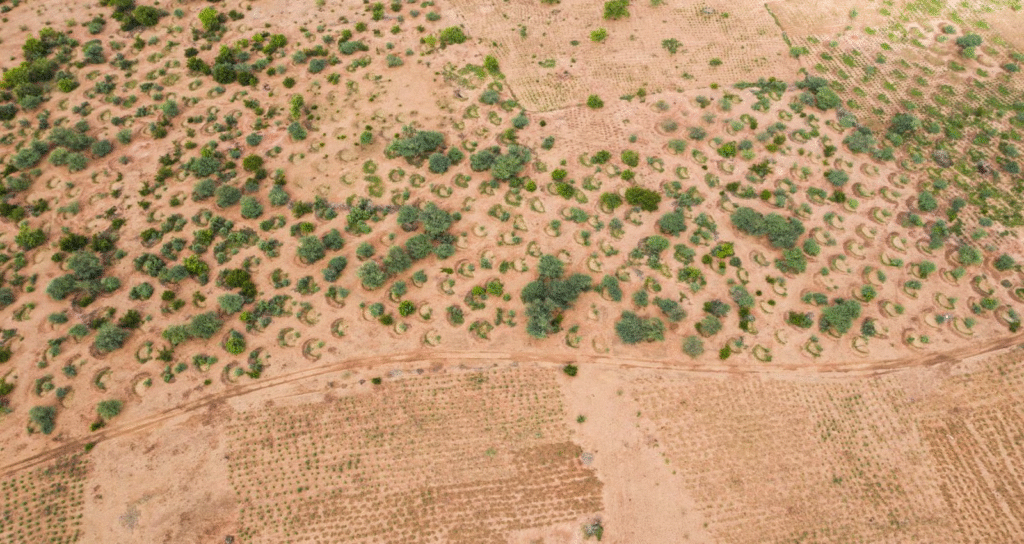
picture source worldbankgroup.org
This is not a future theory – it’s real, today. A desert is visibly turning green, thanks to monitoring, data, and intelligent action.
Monitoring Is the Foundation of Smarter Farming
If you want to farm smarter, you need to understand what’s happening in your soil, air, and plants every day, in real time.
This is where monitoring comes in. And IoT (Internet of Things) is the technology that makes it possible.
What is IoT in Agriculture?
IoT means connecting everyday objects like sensors or sprinklers to the internet. In farming, this means:
- A moisture sensor in the soil can tell a cloud server: “This part of the field is dry.”
- A weather station can broadcast: “It’s about to rain – don’t irrigate yet.”
- A pH sensor can log: “The soil is turning acidic – it’s time to correct it.”
All this happens automatically, without a farmer having to manually check every field.
Why Is Monitoring So Valuable?
| Metric | How It Helps |
| Soil Moisture | Prevent over- or under-watering; conserve water |
| Temperature/Humidity | Predict disease or frost risk |
| Sunlight (PAR) | Adjust planting or harvesting times |
| CO₂ Levels | Understand plant respiration or greenhouse conditions |
| Rainfall | Trigger irrigation systems or alert farmers |
| Leaf Wetness | Early detection of fungal infections |
Even one well-placed sensor can save hundreds of liters of water, prevent crop loss, or eliminate unnecessary pesticide use.
The Bigger Picture: Scaling Across Thousands of Acres
In large farms or land restoration projects, monitoring must scale:
- Dozens of sensors across various zones
- Real-time maps to visualize farm health
- Integration with drone or satellite imagery
- Alerts sent to mobile phones or dashboards
That’s why IoT is such a perfect fit; it allows this level of monitoring to happen at scale, even in remote or developing regions, often with solar-powered, wireless, and low-maintenance hardware.
Technical Foundations: LoRaWAN, MQTT, and Edge Devices
Let’s explore the technologies making it all work, explained simply.
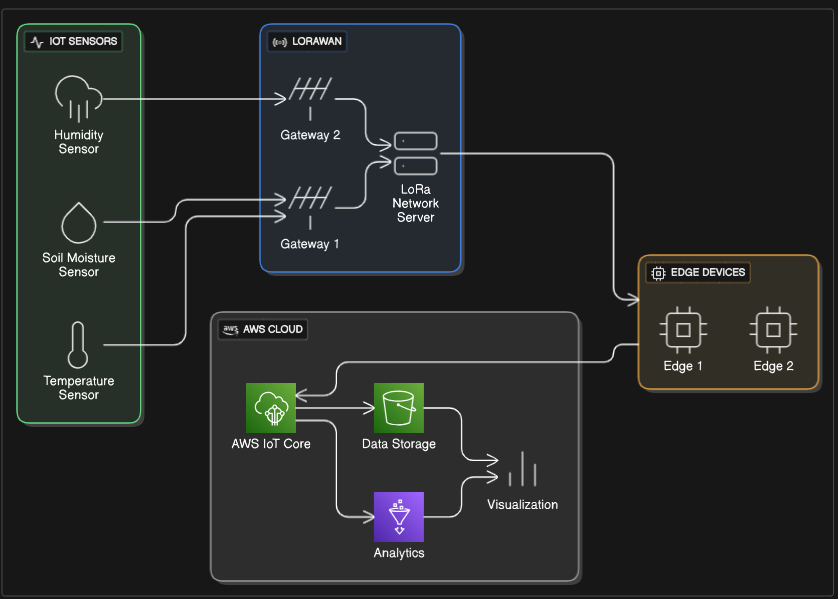
A. The Devices (Field Layer)
Sensors in the ground or on plants collect data like:
- Soil moisture and temperature
- Weather conditions
- Leaf condition or color
- Light levels and CO₂
These sensors are usually:
- Battery- or solar-powered
- Weather-resistant
- Capable of running for years without maintenance
B. Connectivity: LoRaWAN
LoRaWAN (Long Range Wide Area Network) is a radio technology that’s:
- Low-power → perfect for farms with no electricity
- Long-range → up to 10–15 km
- Cost-effective → no need for expensive cellular plans
LoRa sensors “talk” to a LoRa gateway, which sends the data to the internet.
Imagine dozens of sensors across 1,000 acres, all sending data to one gateway placed on a tall pole. That’s LoRaWAN in action.
C. Communication: MQTT
Once the sensor data reaches the internet, it’s sent to a cloud system via MQTT, a special communication protocol made for IoT.
MQTT is:
- Lightweight and fast
- Can work even with poor connectivity
- Ideal for devices sending frequent small messages
Every sensor acts like a little “reporter,” publishing data to topics like:
- /farm/field1/soil
- /greenhouse/zone3/humidity
These messages go to an MQTT broker, which routes them to the right database or alert system.
D. The Edge: Local Intelligence
In some cases, farms use edge devices – small, local computers that:
- Process sensor data on-site
- Make decisions (e.g., “open valve if dry”)
- Reduce cloud costs and latency
This is helpful in regions with poor internet or when an instant reaction is required.
AWS Cloud Architecture: Making It All Work at Scale
IoT data is most powerful when it’s stored, visualized, and acted upon, and that happens in the cloud.
AWS (Amazon Web Services) offers robust, scalable services to power agricultural IoT solutions. Here’s how a typical smart farm system looks on AWS:
Layer 1: Ingestion
- AWS IoT Core: Acts as the gateway between the devices and the cloud. It receives MQTT messages from the sensors.
- Devices are registered and authenticated here to prevent fraud or spoofing.
Layer 2: Data Processing
- AWS IoT Rules Engine: Applies logic to, for example, if soil moisture is below 20%, send an alert.
- AWS Lambda: Runs custom logic, converting sensor readings, sending SMS, calling APIs.
Layer 3: Data Storage
- Amazon Timestream: Optimized for time-series data (e.g., temperature over time).
- Amazon S3: Stores images, raw data, or large exports.
- Amazon DynamoDB: Stores structured information like sensor metadata or user profiles.
Layer 4: Analytics & Visualization
- Amazon QuickSight: Beautiful, interactive dashboards for farm managers.
- Grafana (hosted on AWS): Real-time monitoring and graphing.
- Amazon SageMaker (optional): Use ML to predict yields or detect disease patterns.
Layer 5: Alerts & Automation
- Amazon EventBridge / SNS: Sends emails, app notifications, or triggers irrigation if conditions require.
This setup:
- Scales easily from 10 to 10,000 devices
- Runs on a pay-as-you-go model
- Provides enterprise-grade security and compliance
Fordewind.io: Your Trusted Partner in Agricultural IoT
At Fordewind.io, we’ve built powerful IoT systems for energy, industrial, and agricultural use cases, with proven success in gathering and processing real-time metrics across diverse hardware and networks.
We help clients:
- Connect field devices using MQTT, LoRaWAN, and cellular
- Build AWS-based cloud infrastructures that scale
- Visualize and analyze farm data with custom dashboards
Our role is simple: we make sure the data flows securely, reliably, and in real time.
Whether you’re monitoring fields, forests, or food production facilities, we help you build systems that work.
Conclusion
The future of agriculture is not only about growing food. It’s about growing resilience, efficiency, and harmony with nature.
As we’ve seen, the challenges of 2025, from unpredictable weather to land degradation, require bold new solutions. The most effective one is already here: real-time data.
With IoT-powered precision agriculture, farmers and land restoration teams can:
- Make smarter, faster decisions
- Reduce waste and resource usage
- Predict problems before they happen
- Adapt to changing environmental conditions
- Transform even the harshest landscapes into productive ecosystems
From the revival of the African Sahel through the Great Green Wall to small-scale smart farms feeding local communities, IoT is not just a tool, it’s a foundation for a new kind of agriculture.
At Fordewind.io, we’re proud to be part of this transformation. By building reliable IoT systems that gather, transmit, and visualize data, we empower farmers, engineers, and environmentalists to grow more with less.
The land is ready. The technology is ready.
Now it’s time to plant the future – one sensor, one field, one green miracle at a time.