
✆ + 1-646-235-9076 ⏱ Mon - Fri: 24h/day
How IoT is Shaping the Future of Connected Vehicles

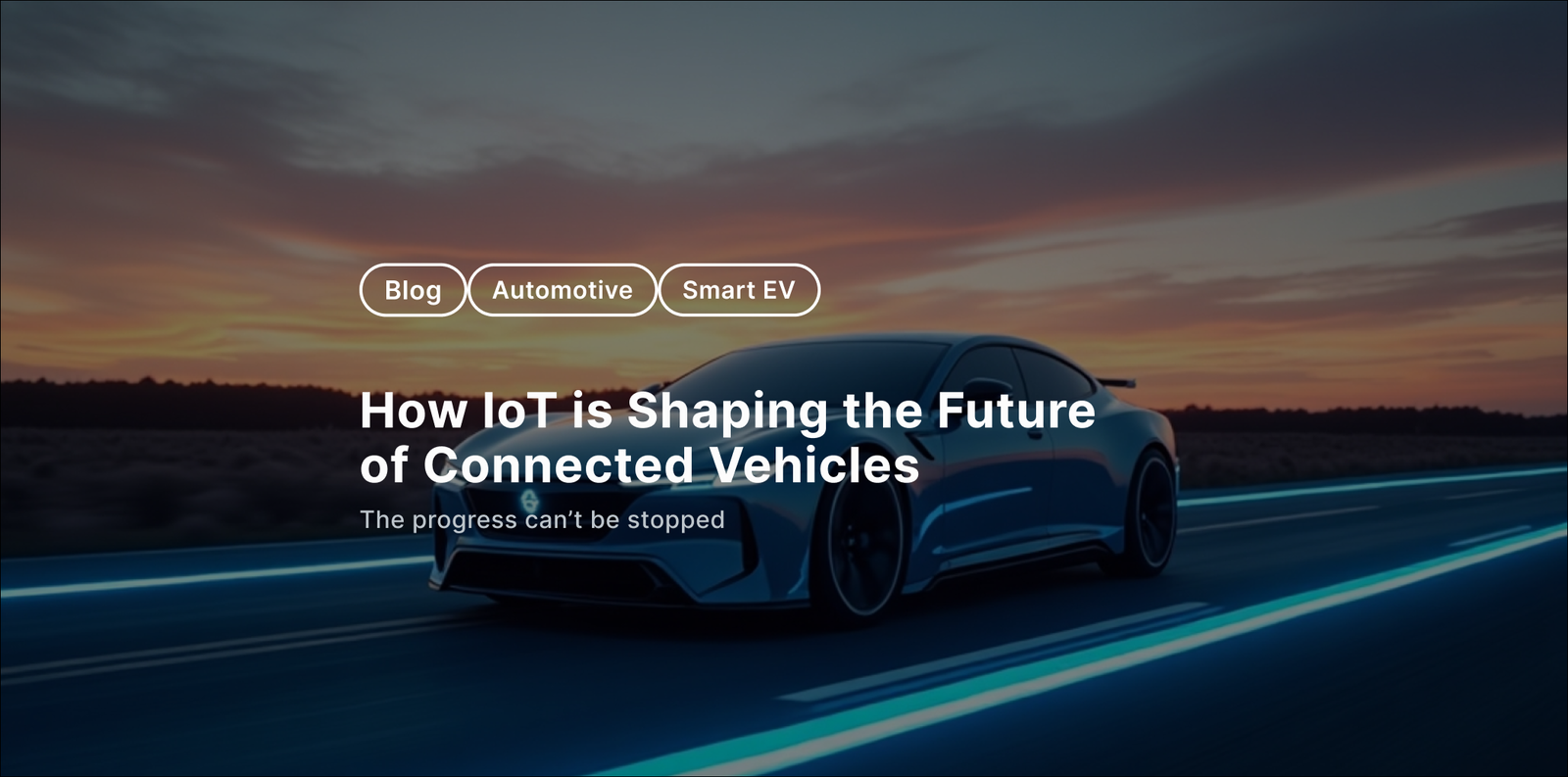
Connected vehicles are automobiles that use internet connectivity and embedded sensors to communicate with external systems, including other vehicles, cloud platforms, mobile apps, and roadside infrastructure. These vehicles are part of the broader Internet of Things (IoT) ecosystem, enabling seamless integration between hardware, software, and the physical environment.
Types of Connected Vehicles:
- Passenger Cars – With GPS, infotainment, and diagnostics systems connected to mobile apps or OEM clouds.
- Electric Vehicles (EVs) require live data exchange with charging stations, navigation apps, and backend systems for performance tracking.
- Commercial Fleets – Trucks, vans, and delivery vehicles tracked in real time for route optimization, fuel efficiency, and driver behavior.
- Public Transportation – Buses and trains connected for real-time location updates, maintenance monitoring, and traffic coordination.
- Autonomous Vehicles – Requiring constant communication with surroundings to ensure safe navigation and decision-making.
The global connected vehicle market is projected to grow from $65 billion in 2023 to over $200 billion by 2030, driven by advances in 5G, IoT, and edge computing (Statista).

The image is generated by AI
How IoT Is Transforming the Automotive Industry
IoT enables automotive companies to go beyond traditional manufacturing and create data-driven digital services, enhancing safety, comfort, and efficiency.
Key Areas of Transformation:
a) Predictive Maintenance & Diagnostics
IoT sensors track engine performance, tire pressure, battery levels, and more, detecting anomalies before failure occurs.
Example: General Motors’ OnStar offers connected diagnostics, notifying users about issues like low battery or worn-out brakes, reducing breakdowns and increasing vehicle longevity.
b) Over-the-Air (OTA) Updates
Manufacturers can push software and firmware updates without needing a physical service visit.
Example: Tesla pioneered OTA updates, rolling out autopilot improvements, UI upgrades, and battery optimizations entirely via cloud, saving time and boosting customer satisfaction.
c) Fleet & Usage Analytics
IoT provides logistics and delivery companies with real-time data on location, fuel use, delivery times, and driver habits.
Example: DHL deployed connected sensors in their delivery fleet to improve route efficiency and reduce CO₂ emissions by 10%.
d) EV Charging & Energy Management
EVs interact with both charging stations and backend systems for smart energy distribution, dynamic pricing, and charge scheduling.
Example: ChargePoint and EVgo use IoT cloud systems to provide live charging station status, remote fault detection, and app integration for EV users.
e) Vehicle-to-Everything (V2X) Communication
Connected vehicles communicate with traffic lights, roads, and even pedestrians’ devices, reducing accidents and improving traffic flow.
Example: Audi tested V2I systems in Las Vegas to show drivers the remaining time on red lights, helping reduce fuel usage and stress during stops.
Technologies and Cloud Platforms Behind Connected Vehicles
IoT Protocols:
- MQTT (Message Queuing Telemetry Transport) – A lightweight publish-subscribe protocol ideal for bandwidth-limited, high-latency environments like vehicles. MQTT is reliable, efficient, and works well with intermittent connectivity, making it the preferred protocol in automotive IoT.
- HTTP/REST & WebSockets – For simpler, less time-critical data retrieval and frontend applications.
Cloud Platforms:
🔹 AWS (Amazon Web Services) – Our core stack
- AWS IoT Core – Connects millions of vehicles/devices securely.
- AWS IoT Device Management – Organizes and manages large fleets of connected devices.
- AWS IoT Jobs – Orchestrates OTA updates.
- AWS Timestream – Time-series database for telemetry, sensor logs, and usage data.
- AWS Lambda – Serverless computing to react to events and trigger automation.
- Amazon S3 & CloudFront – For asset hosting and fast content delivery (e.g., firmware images or mobile app data).
- Amazon DynamoDB – Used for low-latency NoSQL storage of vehicle metadata, user preferences, or event logs.
Edge & Security:
- AWS Greengrass for edge computing.
- TLS encryption, IAM-based access control, and secure authentication ensure compliance with GDPR, CCPA, and automotive-grade security standards.
How Our Company Can Help You Build Connected Vehicle Solutions
We specialize in IoT-driven automotive infrastructure, with real-world experience in EV charging, vehicle diagnostics, and secure cloud integration.
What Sets Us Apart:
Proven Experience
- We’ve successfully delivered projects for Mitsubishi and other global brands, integrating MQTT-based telemetry with AWS infrastructure.
- Our EV charging systems are already deployed, connected via AWS IoT Core, delivering real-time charging metrics and diagnostics to mobile apps and dashboards.
End-to-End Architecture
From the device firmware to mobile frontends, we handle the entire stack:
- Device provisioning and shadow setup
- MQTT data streams and rule engines
- Secure OTA update systems
- Real-time dashboards and alerting pipelines
- Mobile-ready APIs and user interfaces
Smart Charging
We help EV clients:
- Manage energy loads
- Monitor peak-time consumption
- Enable dynamic pricing
- Handle 2-port chargers and limit power intelligently during grid constraints
Scalability & Compliance
Whether it’s 100 chargers or 100,000 vehicles, we scale your project securely with best practices in:
- Fleet segmentation
- IAM roles and policies
- GDPR-compliant data retention
- Secure firmware delivery with signed images
Flexible Support
We adapt to your product lifecycle:
- MVP prototyping
- Production rollout
- Global expansion & remote troubleshooting
- Custom cloud dashboards and alerting via Amazon CloudWatch and third-party tools
Conclusion
IoT is revolutionizing the way we think about mobility. Connected vehicles are not just about GPS or infotainment — they’re about building smart, responsive, and efficient systems that improve our roads, our environment, and our everyday lives.
From over-the-air updates and predictive maintenance to EV charging and fleet management, IoT is the backbone of this transformation. With robust protocols like MQTT and powerful cloud services from AWS, companies can now bring these innovations to life faster than ever.
At Fordewind, we’re proud to support the next wave of mobility – helping automotive and EV clients build connected systems that are scalable, secure, and future-ready.
Let’s drive the future, together.