
✆ + 1-646-235-9076 ⏱ Mon - Fri: 24h/day
How Smart Waste Management Systems Are Reducing Urban Pollution

Every year, the world generates more than 2 billion tons of waste, and by 2050 this figure could increase by 70%, reaching 3.4 billion tons. Traditional collection methods are struggling to cope: garbage trucks run on fixed routes, wasting fuel, creating traffic congestion, and leaving many containers overflowing.
The solution lies in smart waste management systems. These systems use fill-level sensors, GPS trackers, and real-time data analytics to optimize collection routes and improve service efficiency.
Proven results from cities worldwide include:
- Up to 60% fewer garbage truck trips
- Significant reductions in fuel consumption and emissions
- Up to 70% fewer citizen complaints, thanks to faster and more responsive service
Digital technologies show that waste management can be efficient, eco-friendly, and citizen-centered, helping cities become cleaner, greener, and more livable.
In this article, we’ll explore how IoT-driven waste management systems are helping cities around the world combat urban pollution and build a more sustainable future.
Global Context and the Urgency of the Problem
The waste crisis has become a pressing environmental and social threat worldwide. Mismanaged waste contaminates soil, water, and air, destroys ecosystems, and endangers human health.
A key factor is greenhouse gas emissions:
- Methane is released during the decomposition of organic matter in landfills.
- CO₂ and toxins are emitted during waste incineration.
Research shows that the adoption of modern recycling technologies can reduce emissions from the waste sector by up to 84%, directly contributing to the global fight against climate change.
Response of Cities and Markets
Cities are increasingly integrating smart waste management into their broader smart city strategies, as it:
- Reduces pressure on urban infrastructure
- Lowers municipal costs
- Improves overall quality of the urban environment
At the same time, global investments in IoT solutions for environmental monitoring are rapidly growing and are projected to exceed $1 trillion by 2026, with waste management being one of the key focus areas.
Smart Waste Management Technologies
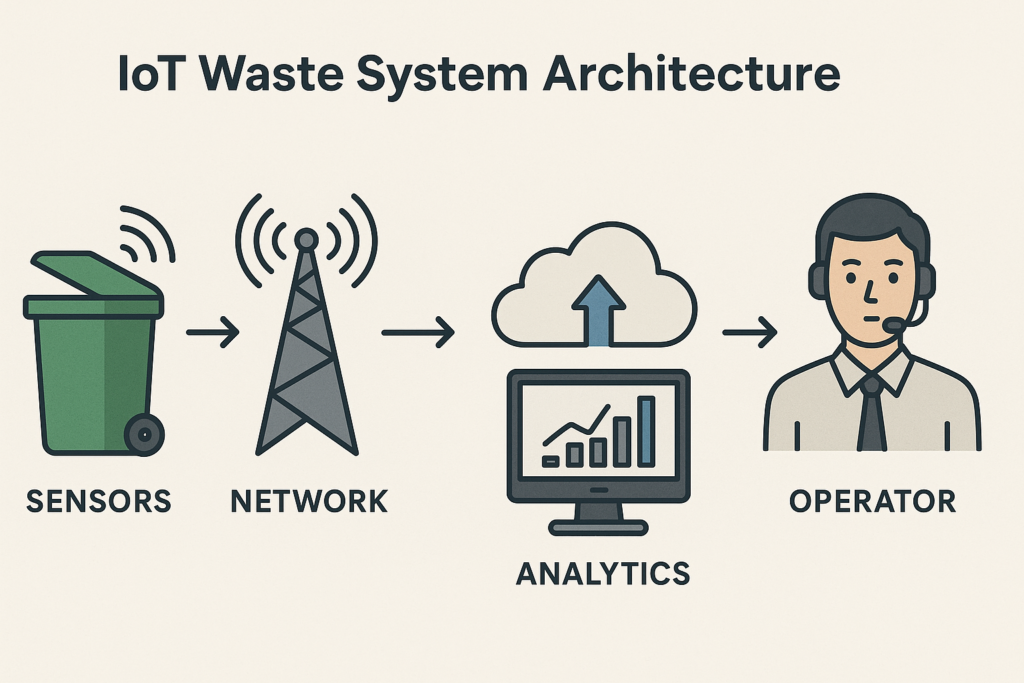
Source: Image generated via ChatGPT 4o by Volodymyr Kazakov
Modern smart waste management solutions combine IoT sensors, GPS, analytics, and automation to make processes more efficient and transparent.
- Fill-level sensors: Ultrasonic, infrared, or AI-powered cameras detect how full a container is and transmit data in real time.
- GPS and route optimization: Garbage trucks equipped with GPS receive optimized routes based on container fill levels, reducing costs and travel time.
- Data platforms: Analytics predict peak loads, optimize schedules, and display maps with fill levels and vehicle status.
- Sorting and automation: “Smart” bins can recognize plastic, paper, or organic waste, compact trash, or even motivate residents with reward systems.
- Artificial intelligence: Algorithms predict when and where containers will be filled and send alerts about anomalies (e.g., fire, vandalism).
These systems help reduce costs, cut CO₂ emissions, increase transparency, and make waste management more sustainable and convenient for residents.
Emission Reduction and Traffic Load Optimization
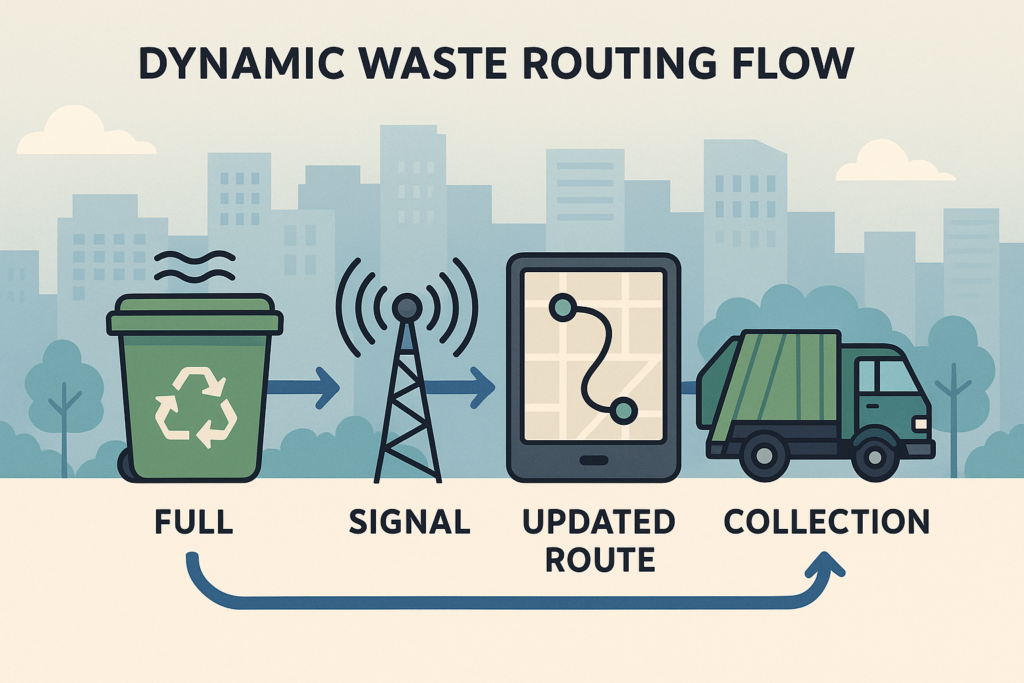
Source: Image generated via ChatGPT 4o by Volodymyr Kazakov
One of the greatest advantages of smart waste collection systems is their impact on emission reduction and urban traffic improvement.
- Fewer collection trips: Thanks to fill-level sensors, garbage trucks only operate when necessary. In some cities, the number of trips has been reduced by 30 – 50%, cutting CO₂ emissions by 22 – 40%.
- Better air quality: Fewer heavy diesel trucks on the road lowers levels of soot, NOx, and noise pollution, especially in densely populated urban areas.
- Reduced traffic congestion: With fewer large garbage trucks on narrow city streets, traffic flow improves, with congestion reduced by up to 30%.
- Extended vehicle lifespan: Lower mileage reduces wear and tear on trucks, decreases maintenance costs, and reduces the need for new vehicles – further cutting emissions from vehicle manufacturing.
In this way, smart systems help cities achieve climate goals while making streets cleaner, quieter, and more comfortable for residents.
Improving Waste Processing and Recycling Efficiency
Intelligent waste management systems not only prevent overflowing containers but also make recycling more effective.
- Timely collection: Sensors alert when containers are full, reducing overflows by up to 80% and improving the quality of sorted recyclables.
- Cleaner recycling streams: Prompt emptying of containers for plastics or paper reduces contamination risk and increases sorting efficiency.
- Analytics and planning: Collected data helps cities identify areas with the highest volumes of recyclables and optimize the placement of bins and sorting stations.
- Interactive bins: Prompts, indicators, or reward programs motivate residents to sort waste correctly, potentially increasing recycling rates by up to 25%.
- Resource savings: Optimized routes and fewer collection trips cut waste collection costs by up to 30%, freeing up resources for infrastructure development and environmental initiatives.
With these technologies, cities are transitioning from a traditional “collect and dispose” model to an intelligent circular system, where waste is treated as a resource for reuse.
Global Examples of Smart Waste Management Implementation
Many cities around the world have already implemented smart waste management systems. Across Europe and Asia, projects are running with smart bins, fill-level sensors, automated sorting, and data analytics.
These case studies demonstrate that modern technologies make waste management more efficient, reduce pollution, and cut costs, proving the value of digital solutions in building cleaner and more sustainable cities.
Madrid, Spain: Smart Bins and Dynamic Collection Routes
In 2023, Madrid launched one of the largest smart waste collection projects in Europe. The city is deploying 11,100 fill-level sensors in waste containers, all connected to Sensoneo’s cloud platform. The system monitors bin status in real time and optimizes waste truck routes, sending vehicles only when containers are actually full.
The project is being implemented by a consortium of local operators (Valoriza, Acciona, OHL Ingesan) in collaboration with technology companies Candam/Sensoneo. Expected outcomes include:
- Fewer collection trips, leading to reduced CO₂ emissions, noise, and traffic congestion
- Savings on fuel and labor resources
- Lower overall maintenance costs for the waste collection system
A similar approach was tested in Rotterdam, the Netherlands, where a pilot project with IoT sensors improved collection efficiency by more than 20%, replacing fixed schedules with routes based on real-time container fill levels.
Sources: Europe’s largest Smart Waste implementation is in Madrid, Enevo touts its waste collection efficiency in Rotterdam
Helsinki, Finland: Automated Waste Sorting with AI-Powered Robots
Near Helsinki, the private company Kuljetusrinki introduced a high-tech system for sorting mixed waste. The solution, developed in collaboration with the Finnish company ZenRobotics (now part of Terex), is based on the use of AI-powered robotic manipulators.
- Three robotic arms automatically recognize dozens of material types, including plastics, wood, metals, and stones.
- The system’s throughput reaches up to 7,000 picks per hour, handling items weighing up to 30 kg.
- Robots efficiently separate recyclable materials from mixed waste, reducing the volume destined for incineration.
- At the same time, automation improves worker safety by eliminating exposure to heavy and hazardous tasks.
This is one of the first installations of its kind in Finland, demonstrating how AI can make waste sorting faster, more efficient, and safer.
Sources: AI and robots taking care of dull, heavy and dirty work in waste management
Songdo, South Korea: Pneumatic, Driverless Waste Collection System
In the smart city of Songdo, a pneumatic waste collection system has replaced traditional garbage trucks. Residents dispose of waste through dedicated in-building chutes, after which it is transported via an underground pipe network directly to a central facility. There, the waste is automatically sorted for recycling, composting, or disposal.
The system was developed by the Swedish company Envac. Although initial investment costs were high, the project is expected to pay for itself within 12 – 15 years thanks to savings in transportation and maintenance.
Key results include:
- Coverage of around 90% of buildings, transporting approximately 97 tons of waste daily
- An 80% reduction in garbage trucks and their associated emissions
- A cleaner, quieter city with fewer odors and overflowing bins
Despite challenges (such as the use of RFID cards for resident access), Songdo stands as a landmark example of a city operating without garbage trucks, demonstrating the potential of high-tech waste management.
Sources: Songdo International Business District
Conclusion
Smart waste management systems give cities full control over the entire cycle of collection and recycling, ensuring cleaner streets, lower emissions, and greater resource efficiency. The benefits extend beyond municipalities – residents also gain through improved service quality, stronger trust, and encouragement toward more sustainable behaviors.
Smart waste is not just a technology; it is a strategic investment in sustainable urban development. Collaboration between cities, technology providers, and citizens can create urban environments that are cleaner, healthier, and more resilient to the challenges of the future.